
With Out Powers Combined
Internal Knowledge Hub
Transform an existing ecosystem with content segregated by type across four separate platforms into one platform to rule them all. This project restructured content around user needs, creating connections between related materials that had previously existed in isolation.
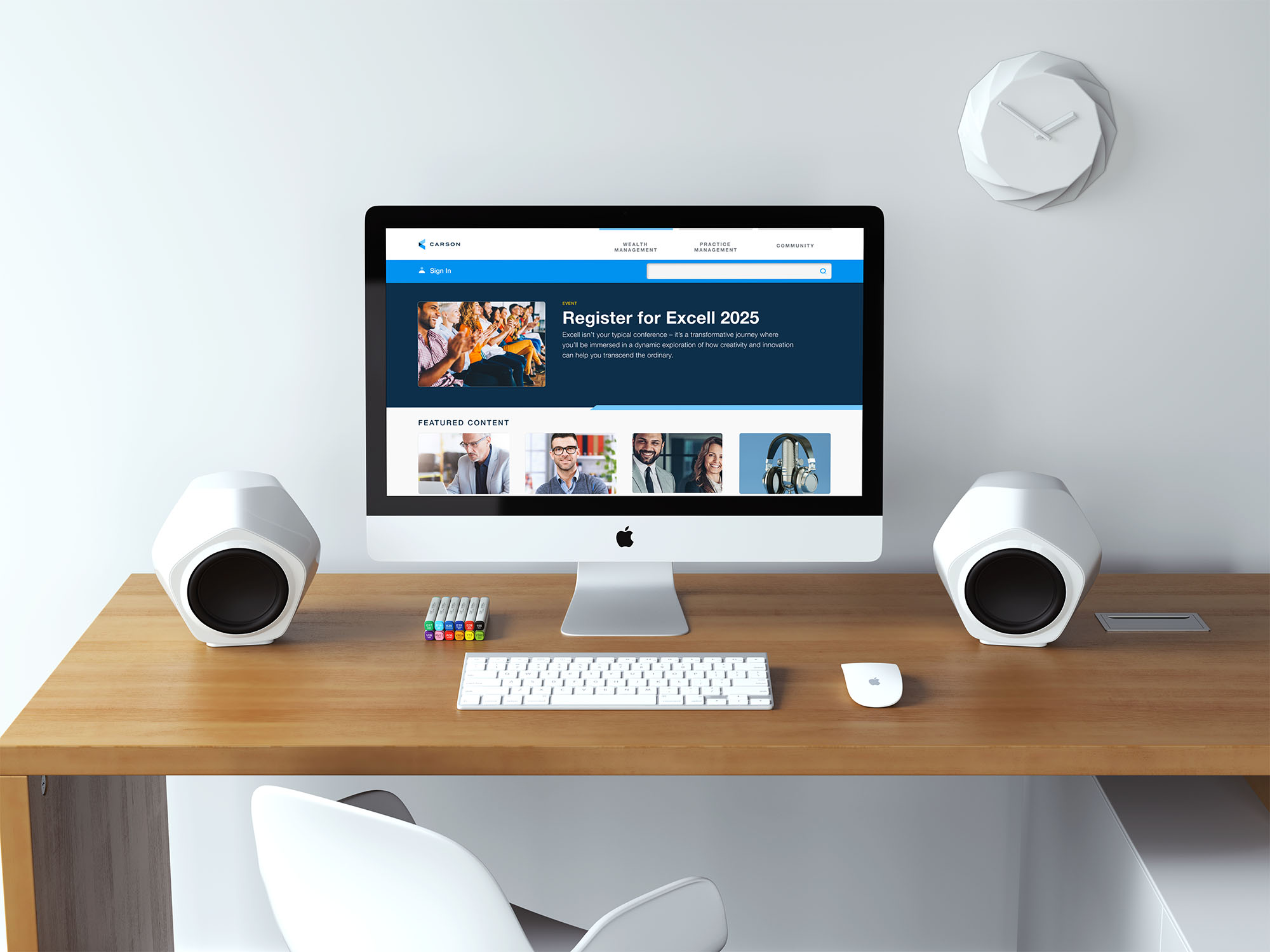
What this says about me...
- I’m excited to take on big, messy problems
- I contribute to content strategy and information architecture at an ecosystem level.
- I can transform a fragmented ecosystem into a discovery-driven experience organized around user goals.
- I learn not only from my mistakes, but from organizational misalignments.
Role
Information Architect
Visual Designer
Stakeholder Collaboration
Team
Director of Web Strategy
Content Strategist
Creative Director of Research
Development Team
Tools
Figma
FigJam
Overview
While working for Carson Group, it became clear that our network of advisors were having difficulty navigating the various platforms where information was housed. The goal was to move toward an integrated solution. “One platform, all relevant information at your fingertips when you need it.” I was tasked with the information architecture and visual design of the site.
Business Challenge
Advisors were forced to navigate multiple disconnected systems to access training, marketing resources, investments information, coaching materials, and operational tools.
A unified, intuitive experience that surfaced the right information at the right time while reducing complexity and platform costs.
This is how we do it
discover
Research
Understand
Empathize
define
Problem
Goals
Position
design
Inventory & Organization
Information Architecture
Visual Design
— discover —
Site Inventory & Future Content Assessment
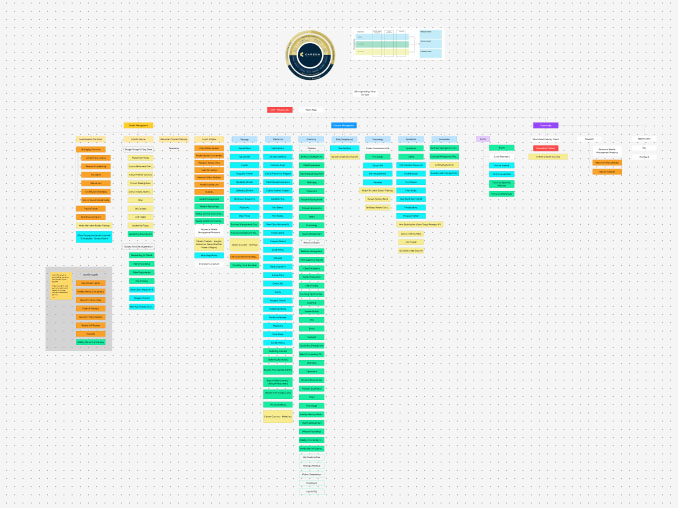
Discovery began by auditing all of the content on the four existing platforms and the blog in order to understand what needed to be integrated. Each was mapped side by side in FigJam.
Then as a group exercise, the stakeholders re-mapped the content by topic. For instance, tax planning blogs are paired with relevant downloadable tax resources and training for the tax solutions program.
The idea was to curate content by subject matter to integrate storytelling and discovery. Together, we compared these maps against the evolving brand value prop and upcoming content calendar to finesse the categories and naming conventions.
— define —
Pain Points
Information Architecture
How might we integrate four systems seamlessly into one?
Scalability
How will this system grow as our offering expands?
Brand Value & Messaging
How might this platform relay who we are and what we offer?
Goal Statement
Create a unified, intuitive experience that surfaces the right information at the right time while reducing complexity and platform costs. Build for scalability and growth. Make our value more accessible and easier for the user to understand as they interact with our content.
— design —
Information Architecture
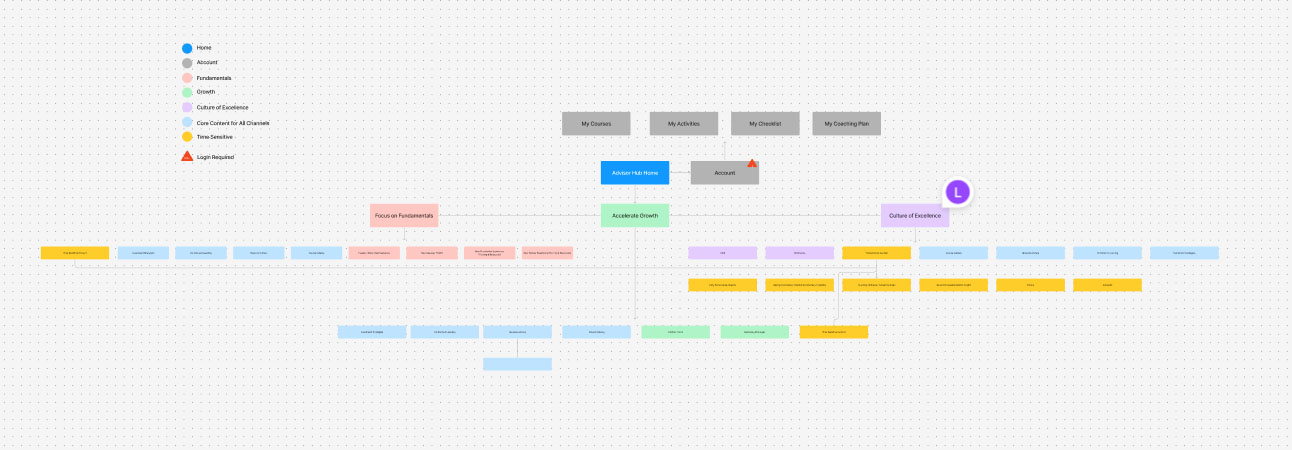
Instead of organizing content around internal departments or platforms, I developed a content framework centered on advisor needs and subject-matter relationships. By inventorying content across four independent systems and mapping connections between articles, resources, training materials, and programs, I created a structure that encouraged discovery while reinforcing Carson’s evolving value proposition.
Digital Wireframes
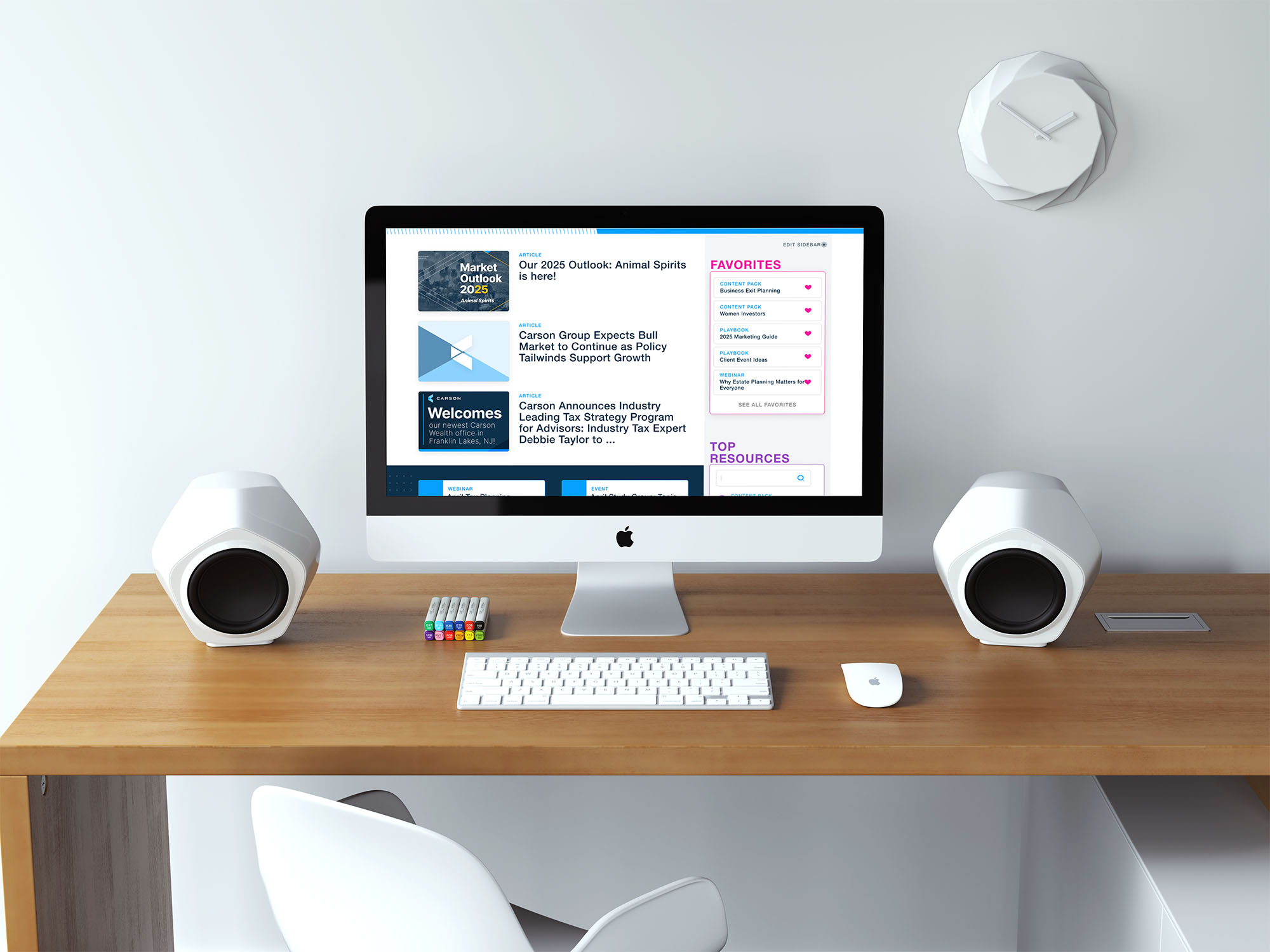
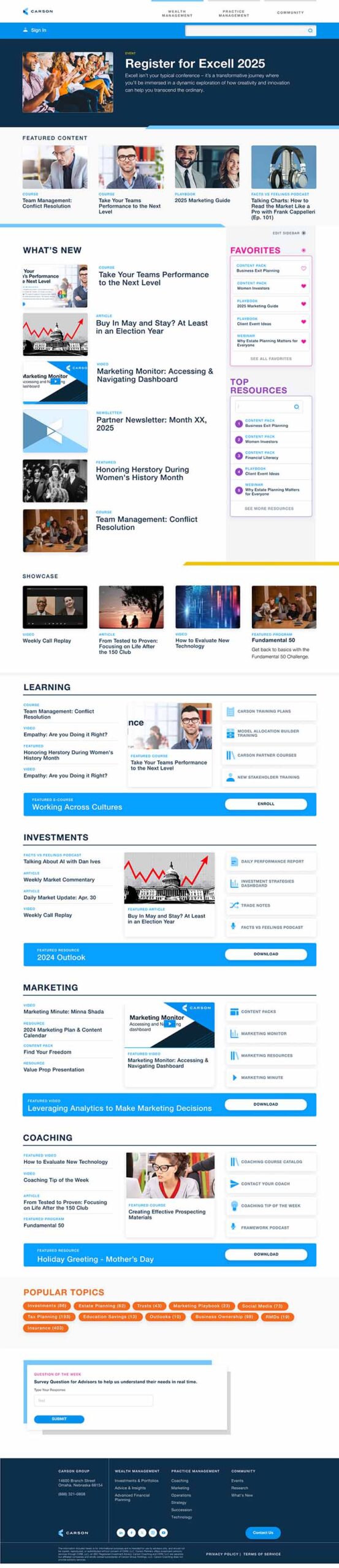
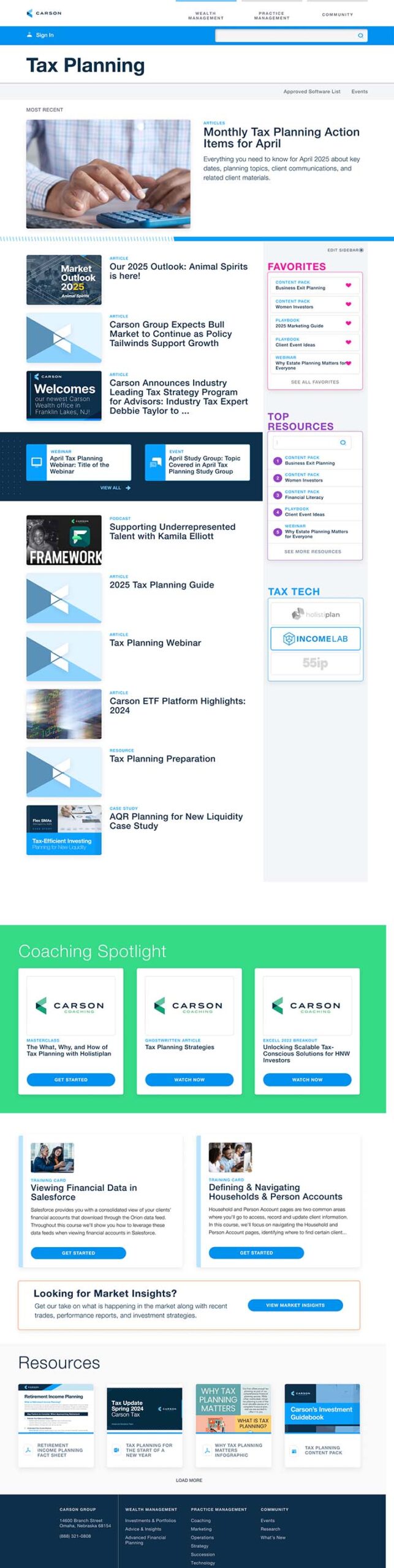
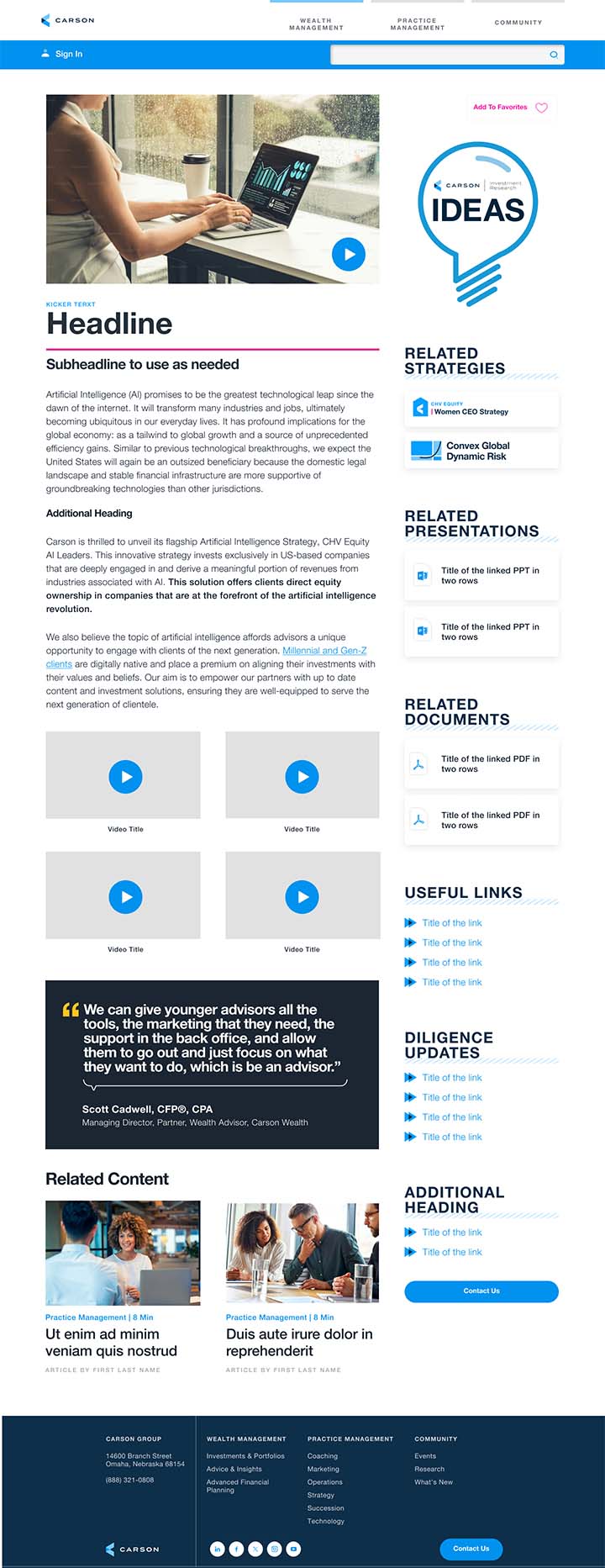
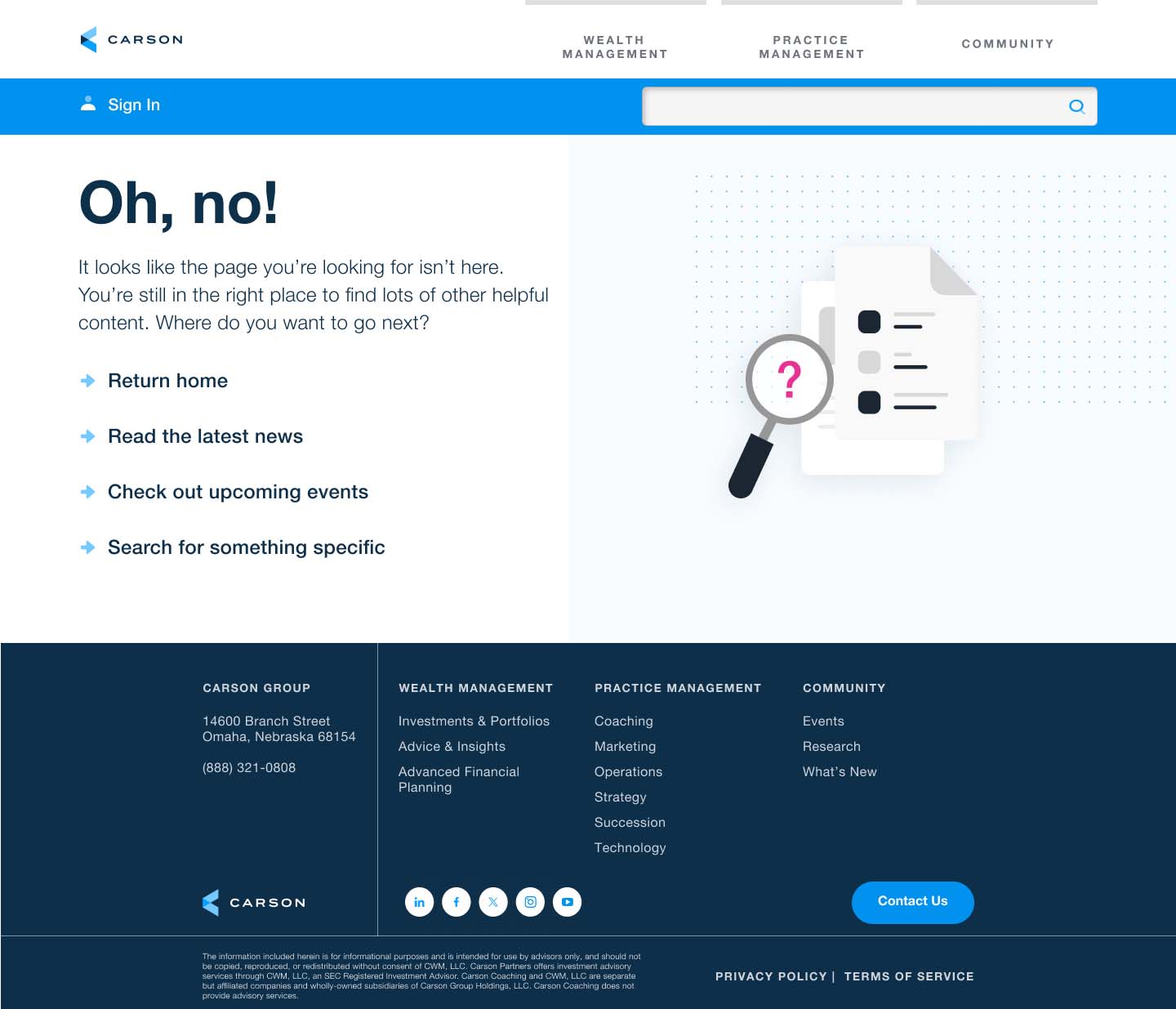
The following high-fidelity wireframes showcase a few of the pages that integrate blog content, resources, training, and market-research. The home page allows for a high-level browsing experience, and category pages dig deeper into targeted content. As this was a full site design, even account-level pages and a 404 were within scope for the visual design. Attention was paid to integrating brand messaging and value propositions into every part of the ecosystem.
— reflect —
Impact
Although the platform was ultimately re-scoped before launch, the project established a shared understanding of the organization’s digital ecosystem and exposed critical questions around content ownership, platform strategy, and long-term governance. The work helped inform future conversations about ecosystem consolidation and highlighted the importance of aligning business objectives before committing to large-scale digital initiatives.
What I learned
This project ultimately highlighted the importance of early alignment, scoped discovery, and organizational clarity before entering solution design. In hindsight, the initiative was over-scoped and under-researched, with misalignment across stakeholders regarding platform goals, content strategy, and long-term ownership of the ecosystem.
While the platform was fully designed, leadership later shifted direction due to evolving priorities, including the separation of coaching and training systems and a reduced emphasis on blog-driven content. As a result, the project was re-evaluated and re-scoped before launch.
Although the final product did not ship as originally envisioned, the experience was a significant step forward in my development as a digital designer. I deepened my understanding of information architecture, hierarchy systems, and modular UI design in Figma, and gained hands-on experience designing component-based systems intended for scalable implementation.
Working closely with development also strengthened my understanding of how modular design translates into production, including how interface components are constructed, reused, and programmatically adapted within a CMS environment.
Most importantly, this project reinforced that successful digital experiences depend as much on problem definition and cross-functional alignment as they do on execution.
More Case Studies

What's on your mind?
Improve this site:
Share your experience as you interacted with this site.
Your feedback is critical to making impactful changes.
Collaborate:
New challenges welcome!
Tell me about how you want to work together.